a new metro station at the heart of urban mobility, connected to the city and open to the future
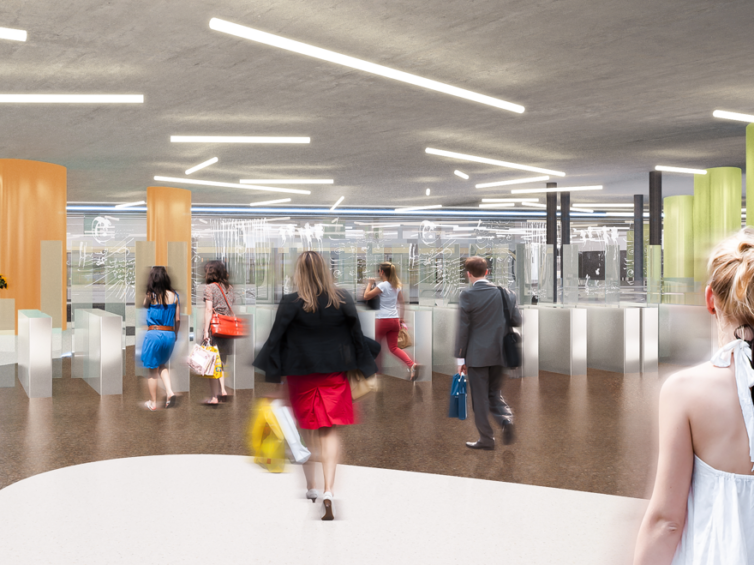
a new metro station at the heart of urban mobility, connected to the city and open to the future
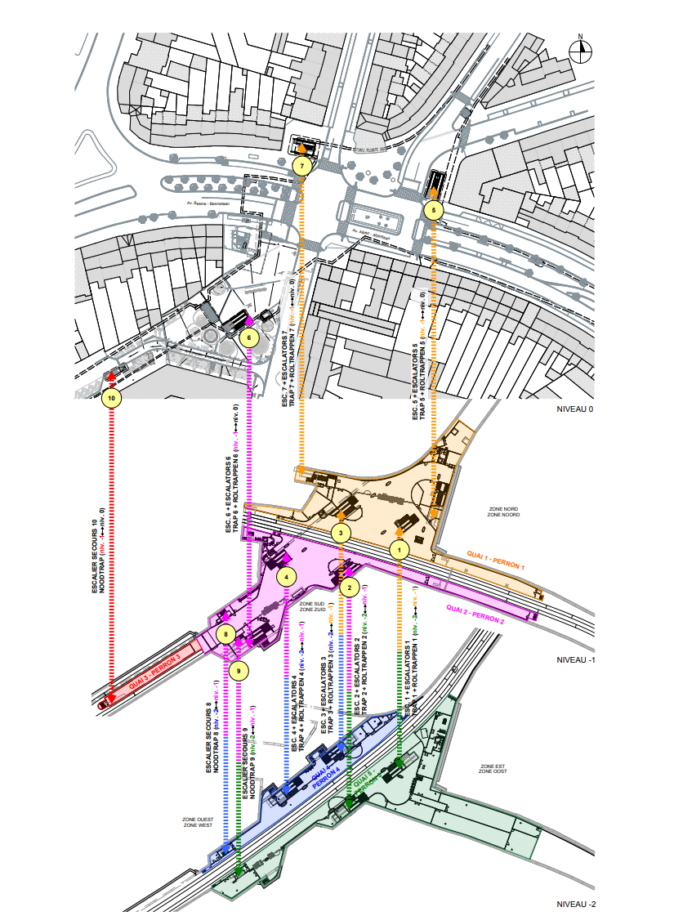
The various interventions resulting from the station’s transformation project included:
• the development of level -1 as a through and terminus tram station,
• the redevelopment of level -2 to accommodate the metro,
• the integration of 5 new elevators connecting the different levels and the construction of new exterior structures on Place Albert,
• the addition of a new emergency exit under Avenue Jupiter,
• the restoration of Avenue Jupiter to its original condition,
• and the installation of new smoke ventilation shafts at surface level.
| program | a new metro station at the heart of urban mobility, connected to the city and open to the future |
| client | STIB / MIVB |
| address | Place Albert • 1190 Forest |
| building type | move |
| status | under construction |
| offices | brussels |
| size | 7.925 sqm (phases I et II) |
| team | in collaboration with Arcadis |
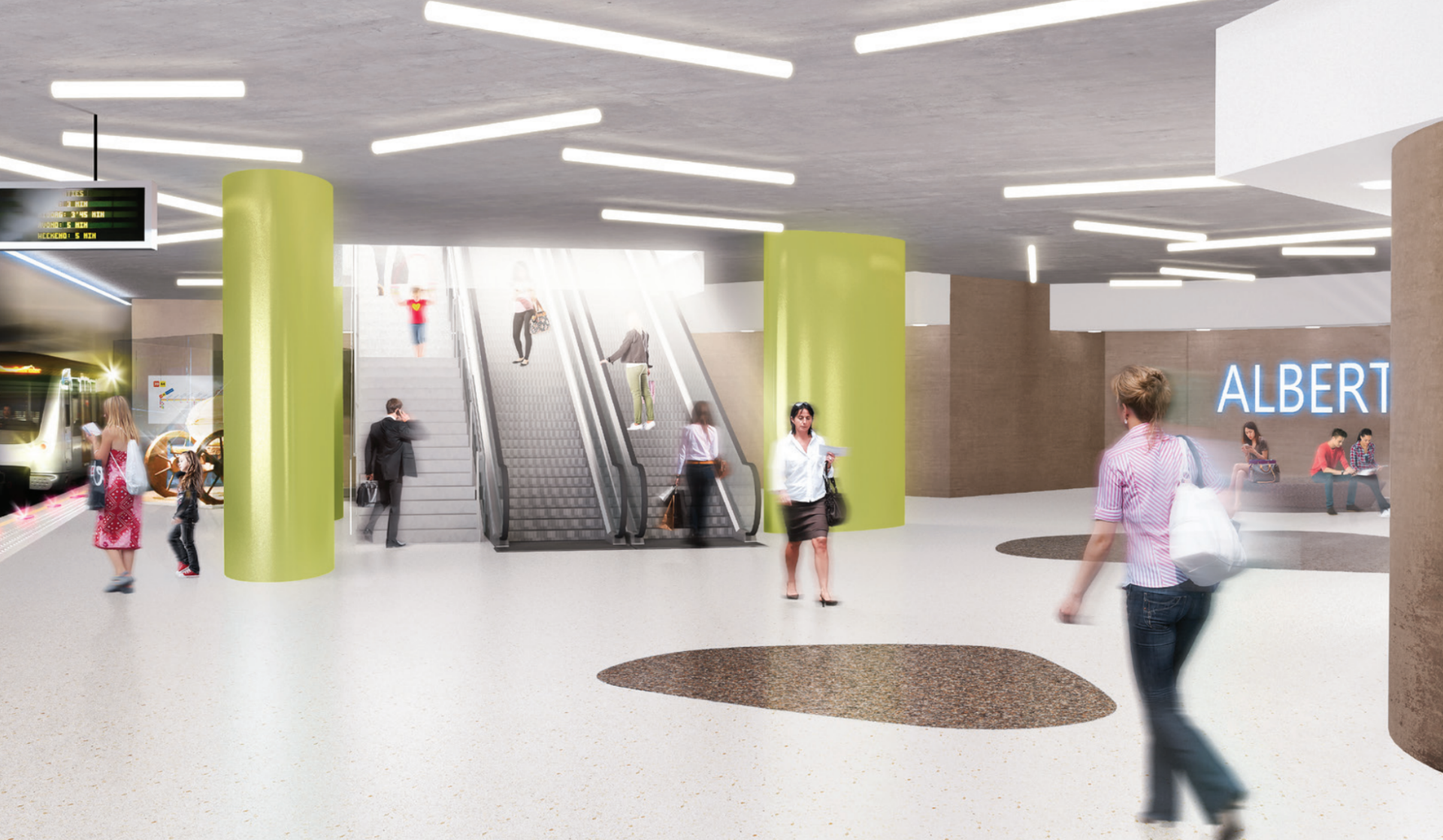
The restructuring project of Albert station is part of the major North-South metro connection in the capital, involving significant renovation and modernization of aging structures dating back to the 1980s.
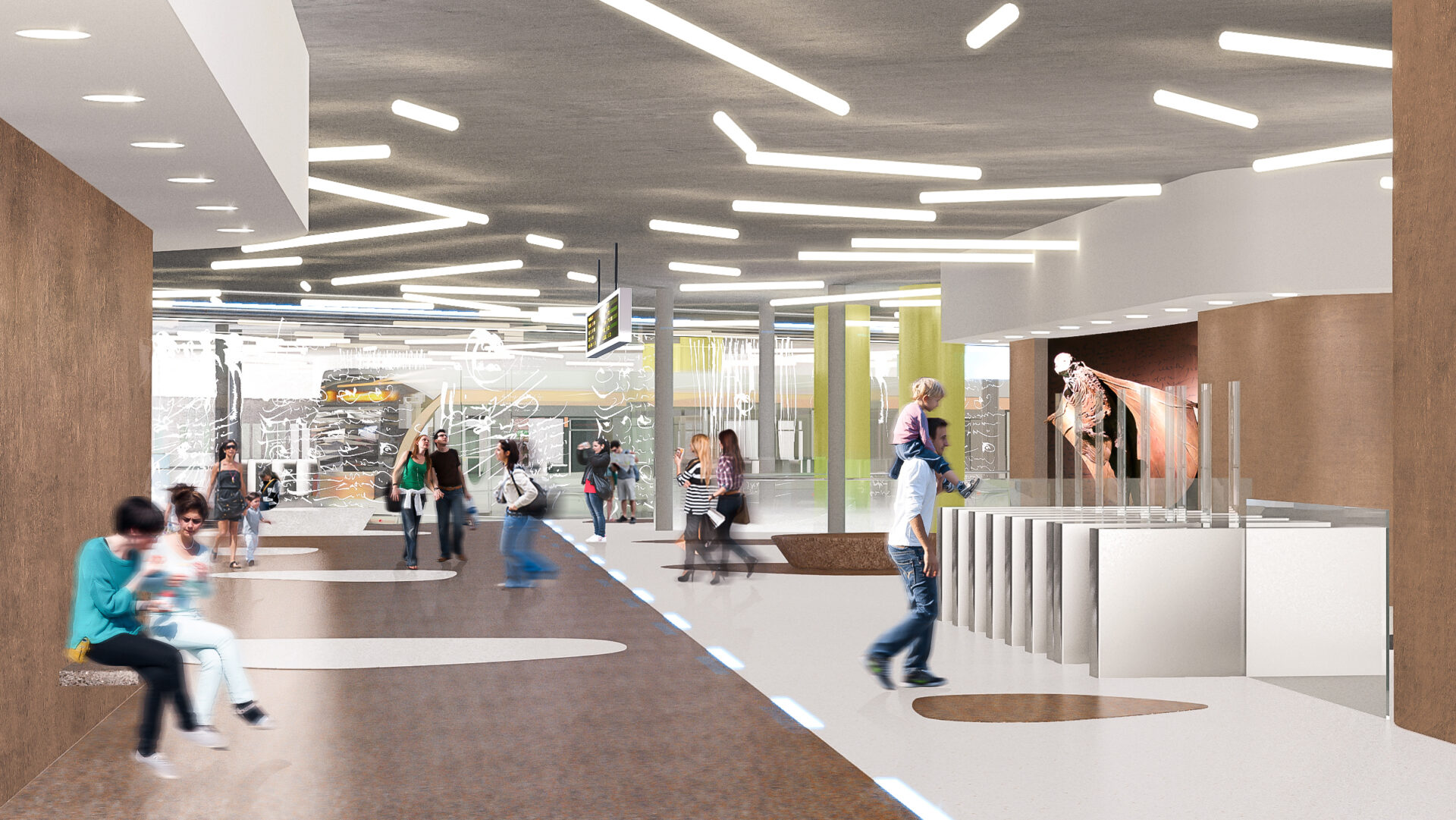
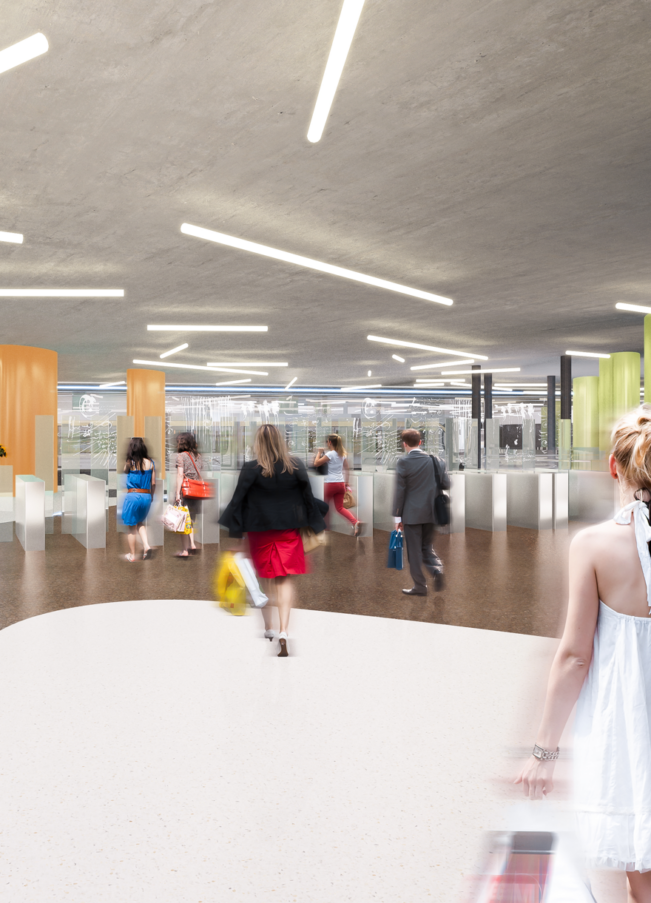
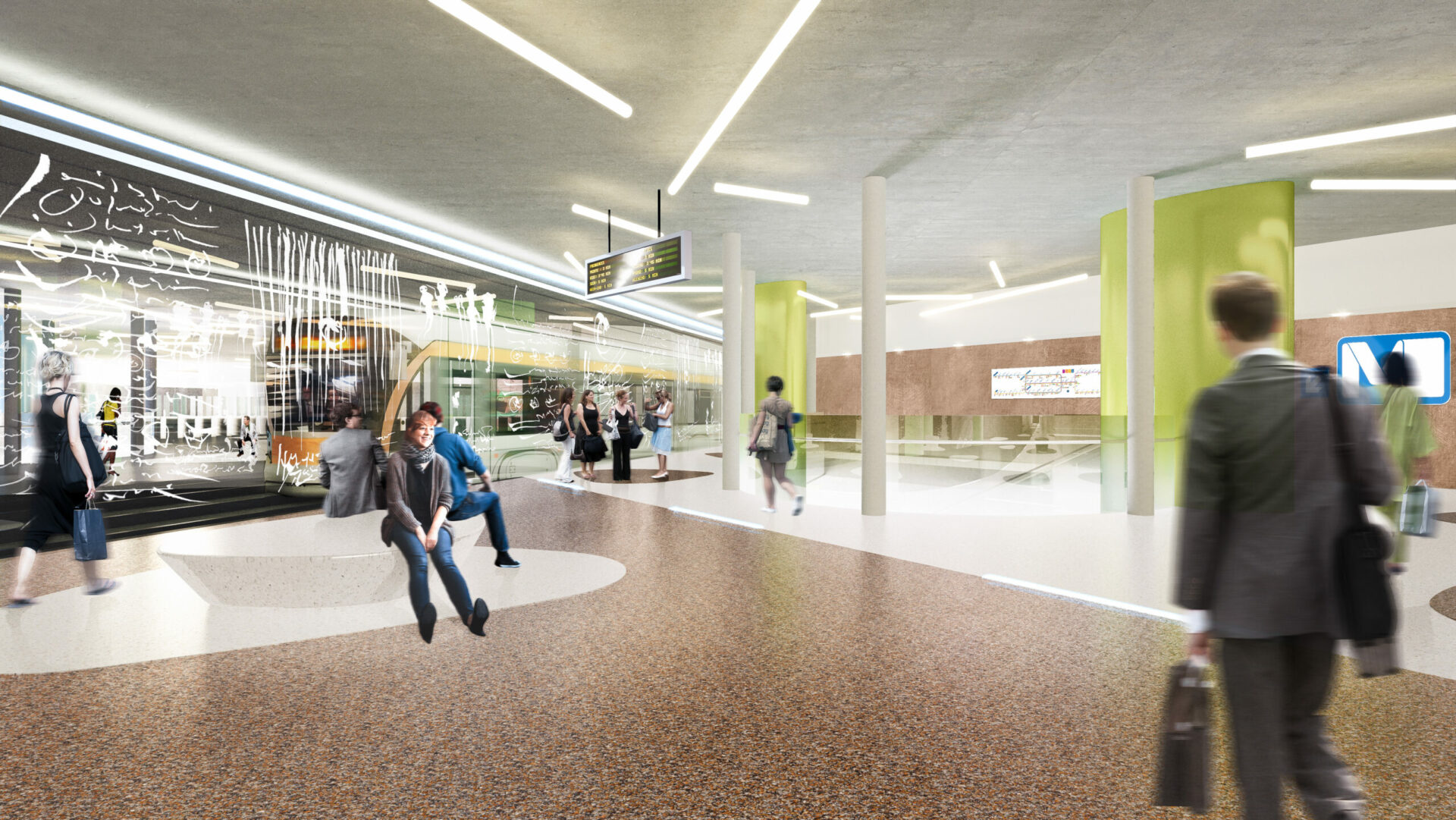
The new configuration of Albert station as a mixed-use facility (tram and metro) will result in increased intensity and complexity of passenger flows. The architectural objective is to ensure smooth circulation while creating a sense of safety and giving the station its own identity. Meeting and social spaces will contribute to this goal, as will the openness of access, circulation, and waiting areas. Connections between the platforms and upper levels will be clarified through noise reduction, transparency and the use of color, the installation of quality retail, the provision of a secure bicycle parking area, and the use of durable finishing materials.
The site is also designed to accommodate sculptures and selected screen prints by the artist Jephan de Villiers.
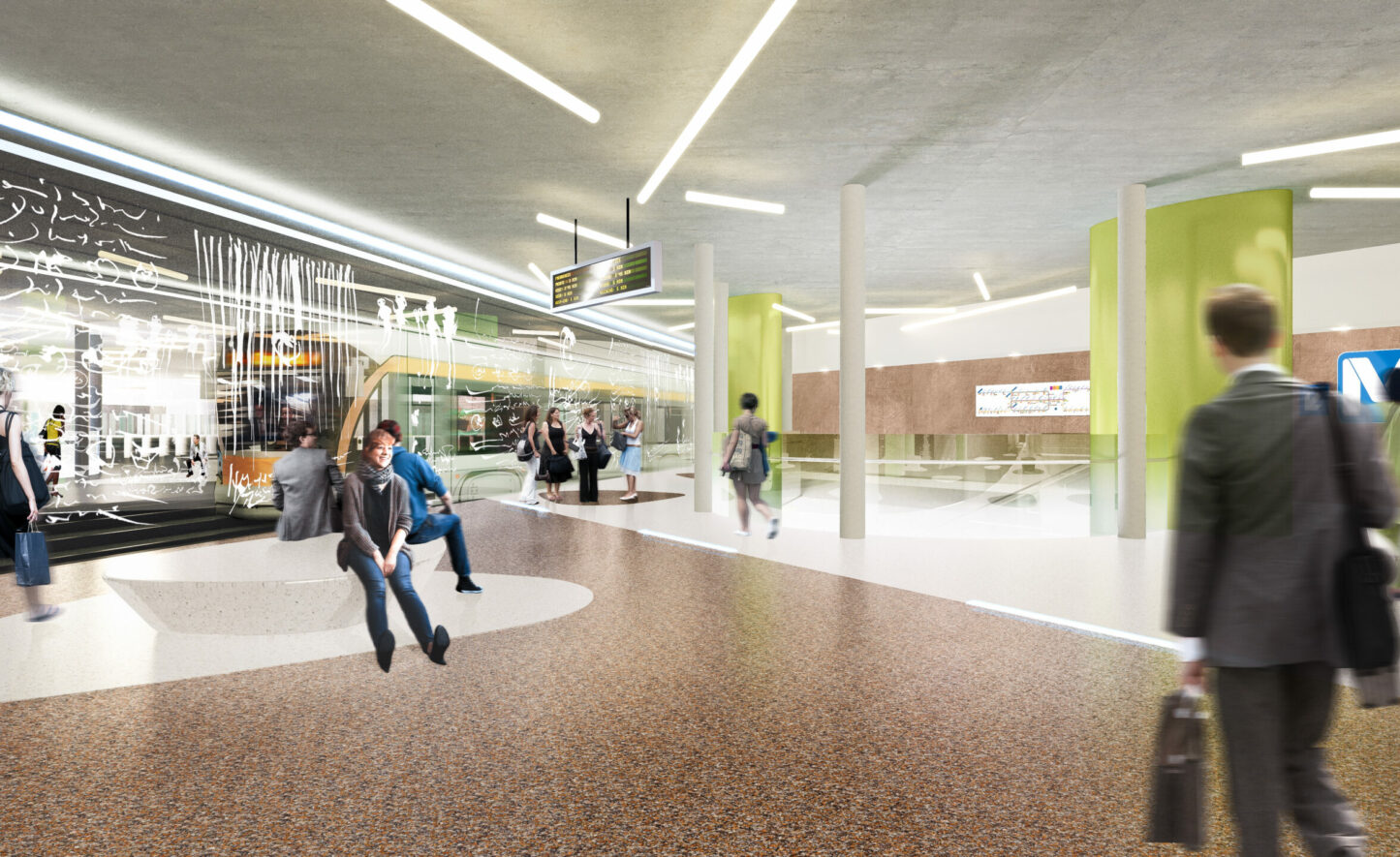
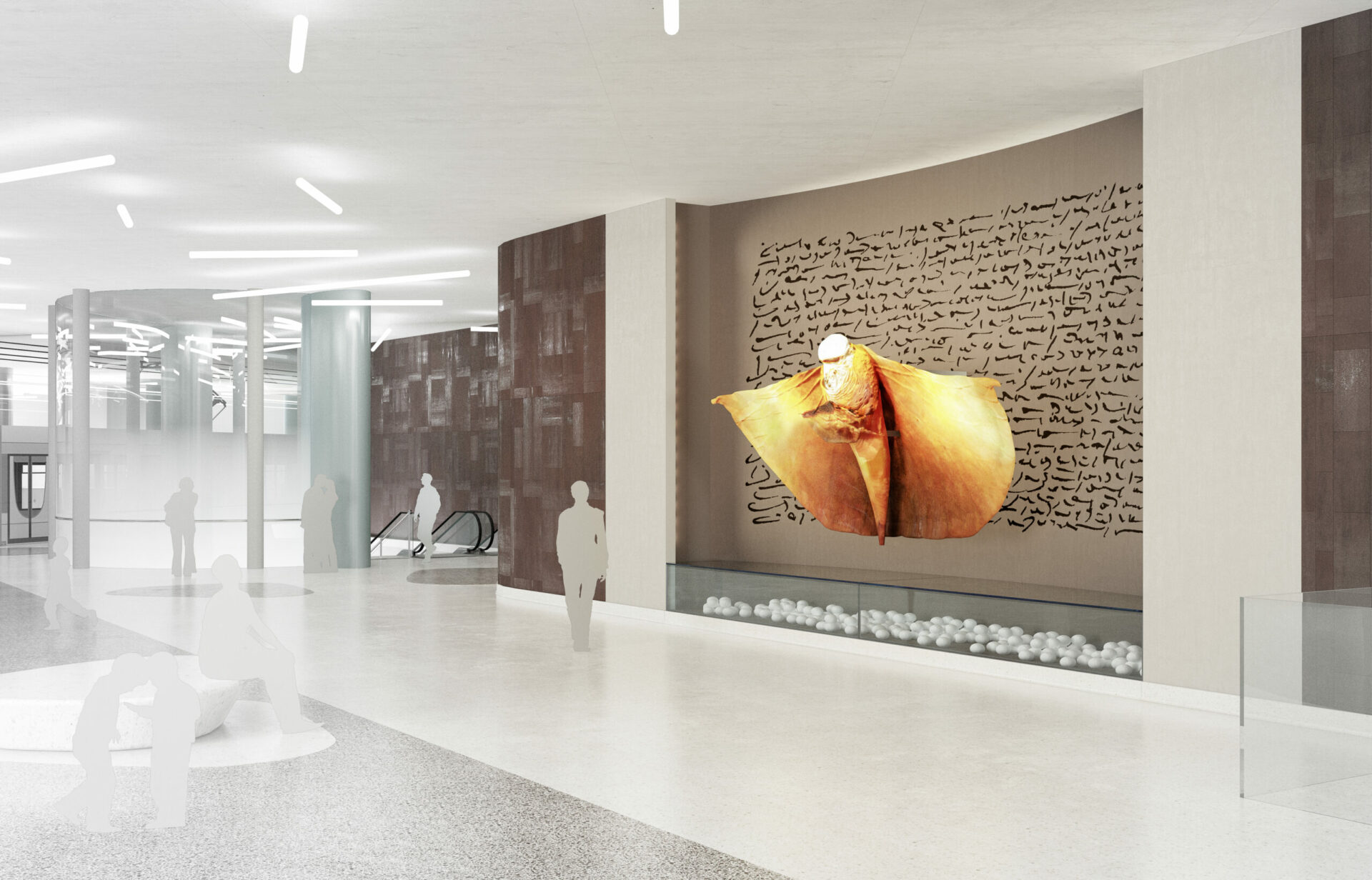
It was therefore decided by the public art expert committee that the existing artwork by the artist Jephan de Villiers would be repositioned within the newly redeveloped station. The space is thus designed as a showcase for an “archaeological” artwork whose history has been tied to Albert station since its inception.
The new placement of the ‘fragments of memory,’ as shown in the urban planning permit drawings, was discussed with the artist and approved by him:
• the statuary and fragments of memory will be relocated to level -1, in a niche integrated near the staircase of the South zone,
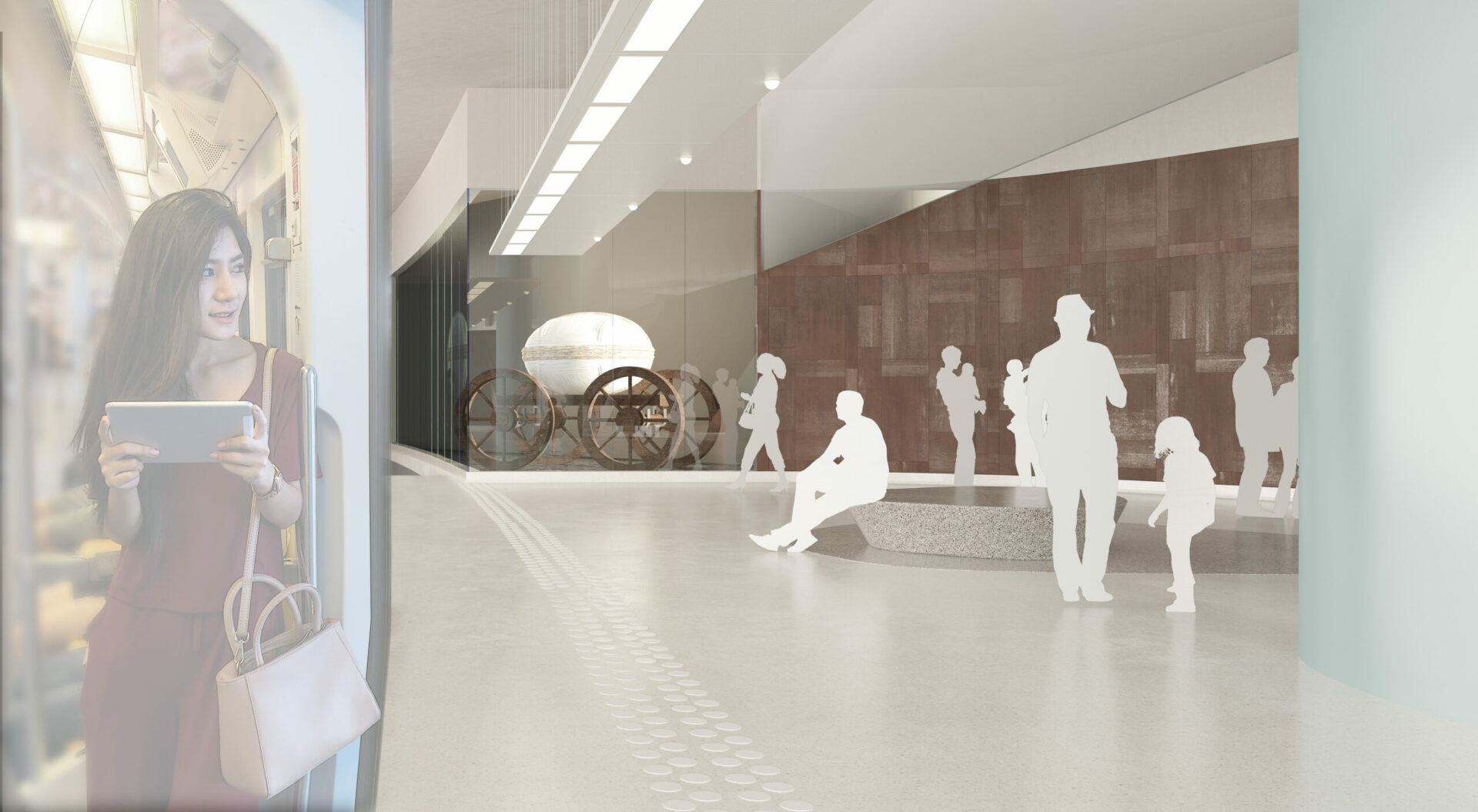
• the cart will be positioned at the end of the platform on level -2, in a glass showcase visible to all passengers,
• the inscriptions will be reworked to adopt a more contemporary technological language,
• a new fragment responding to the discovery of the cart will be created: a photographic image representing the exodus of the people of Arbonie,
• the new inscriptions: within this new overall framework, we propose that the glass walls, which provide fire compartmentalization along the level -1 tracks and separate the North and South zones, serve as supports for new screen-printed inscriptions while preserving the transparency of the spaces.
The essence of the artwork lies in its fragmentary archaeological discovery effects, which passengers will encounter along the route between the two levels of the station.
The guiding principles of the architectural concept follow several specific criteria:
want to know more about assar or contribute to its continuous development